Three advisory matches arrive before lunch. There is capacity to investigate one immediately.
The highest numerical severity is useful context. The next question is which affected deployment gives an attacker a reachable path to something valuable.
Put the deployments on the board
These are fictional deployment examples informed by the linked advisories:
A: a shared gateway with management authentication disabled. It runs a version affected by the Bifrost registration flaw. An untrusted caller can reach command-starting configuration.
B: a critical HTTP service with retained-session exhaustion. It runs an affected RMCP Rust SDK version. The endpoint is reachable and the service supports an essential workflow.
C: a dormant local dependency. The affected package exists in a cache, but there is currently no evidence that the vulnerable feature is running. Ownership and removal still need follow-up.
A is urgent because of reachable execution authority. B can also be urgent because availability matters to the business. C needs resolution, but a package match alone does not demonstrate the same immediate exposure.
Work through four questions
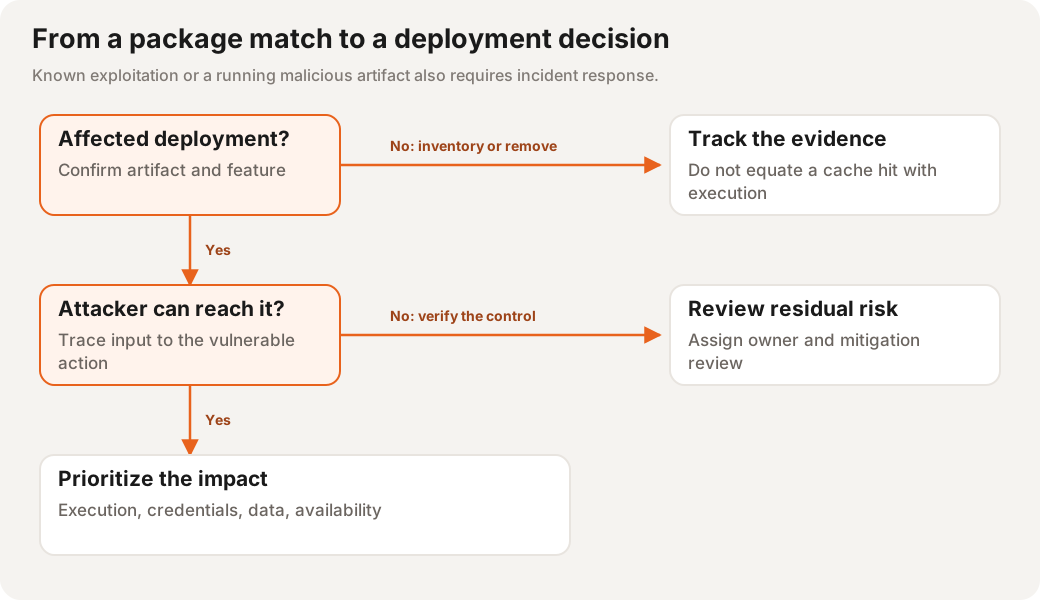
Establish whether the affected code and feature are present. Trace which caller or untrusted input can reach them. Identify the files, identities, tenant data, and networks available afterward. Finally, verify which controls actually interrupt that path.
Known exploitation, a malicious artifact already running, or evidence of compromise should trigger incident response alongside remediation. Do not let a routine scoring exercise delay containment.
Give the owner an explainable priority
Write a short path description:
A reachable management endpoint accepts unauthenticated registration and starts a process with the gateway's permissions.
Attach the observed version, configuration evidence, and immediate containment options. That gives the owner a reason to act and another reviewer a way to challenge the assumptions.
Compensating controls need evidence too. A configured firewall rule is useful only if it covers the actual route. Record an owner and review date for any temporary mitigation.
Close the deployment, not only the ticket
Verify the new artifact in runtime inventory. Restart or replace persistent processes where required. Repeat the relevant reachability or regression check.
If credentials may have been exposed before the patch, fixing the code does not revoke them. Carry that question into response rather than closing it with the version bump.
The inventory guide supplies the evidence for this decision, and capability-based assessment helps explain the authority behind it.